
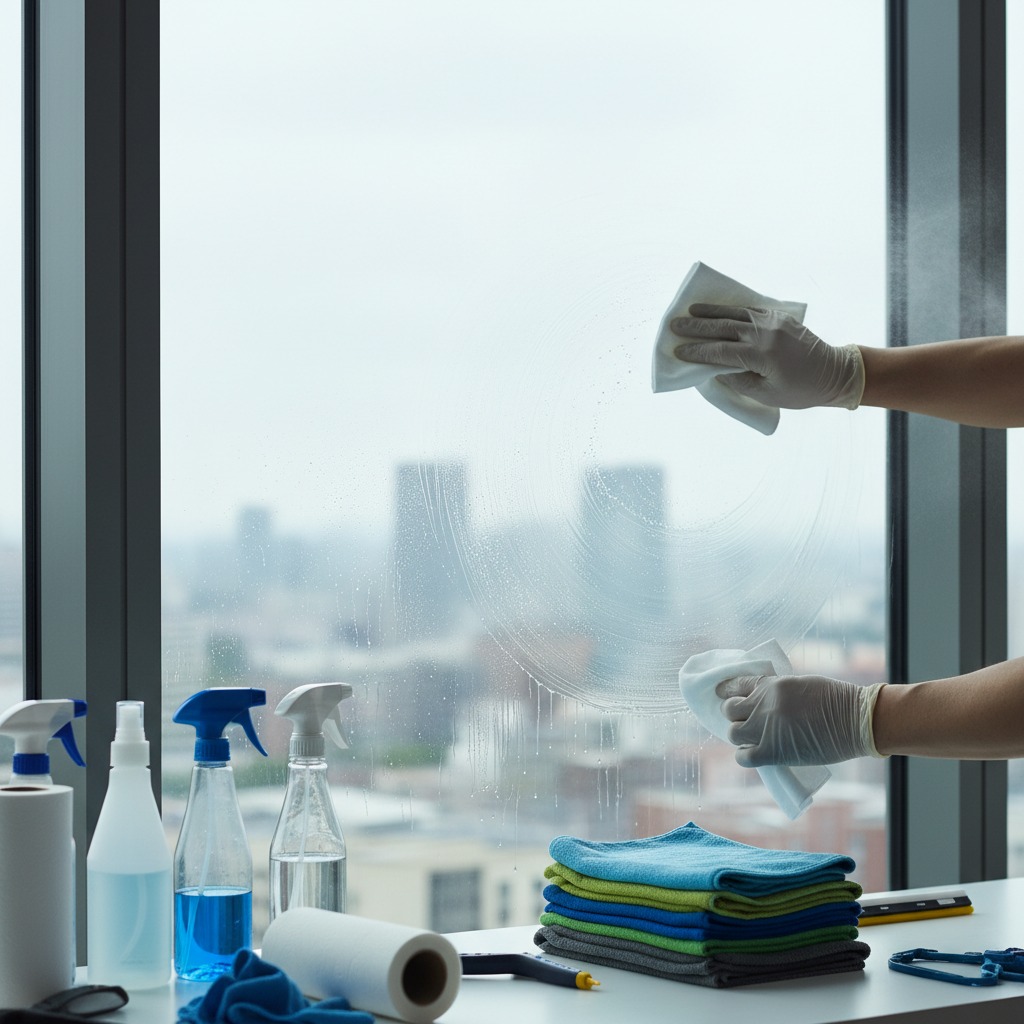
Silicon dioxide (SiO₂) coatings have become widely known for their hydrophobic properties and their ability to improve the cleanliness and appearance of glass surfaces. These coatings are commonly marketed for applications such as spectacles, windows, shower screens, and automotive glass because they help water bead and run off easily. While this functionality can be highly effective for ordinary glass surfaces, it does not necessarily make SiO₂ coatings suitable for solar panels. The environmental conditions faced by solar panels are far more demanding, and the types of contamination that affect them require a more specialised approach than simple hydrophobicity alone.
Sio2 Primary Function.
The primary function of most SiO₂ coatings is to create a water-repellent surface. By lowering the surface energy of the glass, water forms droplets instead of spreading out across the material. Rainwater can then roll off the surface more efficiently, carrying loose dust and minor debris with it. For household glass applications, this is often sufficient because the main goal is to reduce water spotting and make cleaning easier. In these situations, contaminants are usually light and temporary, so the coating performs well.
However, solar panels face a very different set of challenges. Unlike ordinary glass surfaces, solar panels operate continuously outdoors and are exposed to a wide range of pollutants that are far more stubborn and damaging. Bird droppings, algae, lichen, tree sap, industrial fallout, pollen, and organic residues can all accumulate on panel surfaces over time. These contaminants are not easily removed simply because water runs off the panel. Many of them adhere strongly to the surface and can remain attached even after repeated rainfall.
Solar Panel Pollutants.
Bird droppings are a particularly serious issue for solar panels. They are sticky, acidic, and capable of blocking significant portions of sunlight from reaching the photovoltaic cells beneath the glass. Even small shaded areas can substantially reduce the electrical output of a solar panel because photovoltaic systems are highly sensitive to partial shading. A hydrophobic SiO₂ coating may allow rainwater to flow away quickly, but it does little to break down or release hardened bird droppings from the panel surface.
Similarly, biological contaminants such as algae and lichen present another major limitation for SiO₂ coatings. These organisms are living growths that attach themselves firmly to surfaces, especially in damp or shaded environments. Once established, they cannot simply be washed away by water runoff. In many cases, they require antimicrobial or anti-biofouling technologies specifically designed to prevent growth and adhesion. Standard SiO₂ coatings were never engineered with these biological threats in mind, meaning they offer little defence against long-term organic contamination.
Other issues.
Another problem is that hydrophobic surfaces may actually reduce the self-cleaning effect needed for solar panels in certain conditions. Some advanced solar panel coatings use other technologies instead. Hydrophilic coatings spread water evenly across the surface, allowing rainwater to form a thin cleaning sheet rather than isolated droplets. Superior solar coatings can actively break down organic matter using sunlight. These technologies are far more effective against pollutants such as bird waste, algae, and oily residues because they address the root cause of contamination rather than merely repelling water. This is one of the reasons why solar companies like PV Coating are very popular amongst solar installers because their coating technology is effective at addressing solar pollutants.
Light Absorption.
Solar panels also require coatings that preserve maximum light transmission. Any coating applied to a panel must avoid reducing the amount of sunlight reaching the solar cells. While many SiO₂ coatings are transparent, their performance benefits may not justify their use if they fail to prevent the contaminants that most severely affect energy production. A coating that only improves water runoff but cannot handle heavy organic pollution may provide minimal real-world efficiency gains for solar installations.
Durability.
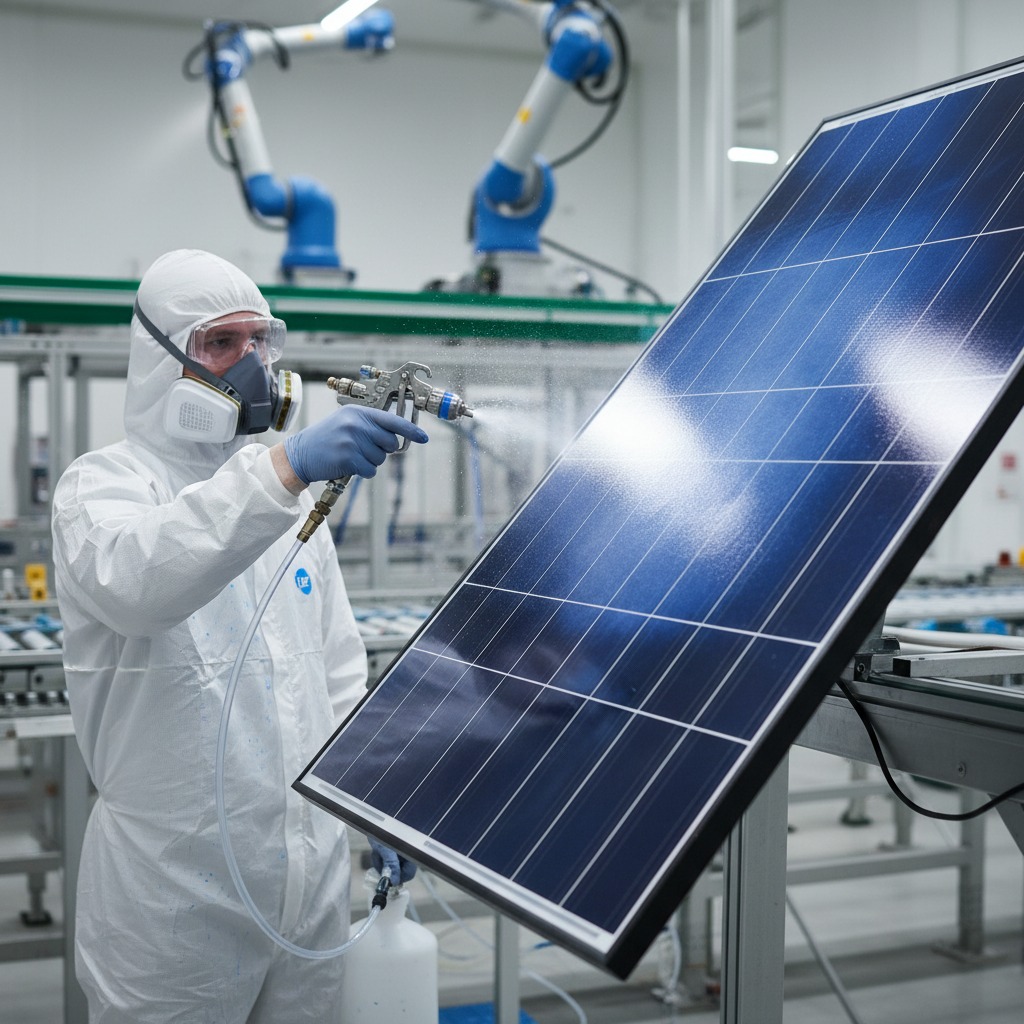
Durability is another important consideration. Solar panels are expected to remain operational for twenty to thirty years under constant exposure to ultraviolet radiation, temperature fluctuations, moisture, and airborne pollutants. Many commercially available SiO₂ coatings were originally developed for consumer glass products with far less demanding conditions. As a result, their long-term performance on solar panels may be limited, especially when exposed to continuous environmental stress and repeated cleaning cycles.
Ultimately, the key issue is that SiO₂ coatings were not specifically designed for the operational realities of solar energy systems. Their hydrophobic nature makes them highly effective for keeping ordinary glass cleaner and reducing water marks, but solar panels require much more than water repellency alone. They need coatings capable of resisting biological growth, reducing adhesion of stubborn organic pollutants, maintaining optical clarity, and supporting long-term energy efficiency.
Conclusion.
In conclusion, although SiO₂ coatings perform well on conventional glass surfaces, they are not ideally suited for solar panels because the challenges faced by solar installations extend far beyond simple water management. Pollutants such as bird droppings, algae, and lichen require specialised anti-soiling and anti-biofouling technologies that standard hydrophobic SiO₂ coatings were never intended to provide. For solar panels to maintain optimal performance over time, coatings must be specifically engineered to combat the unique environmental contaminants that directly impact solar energy production.